
- EXPLORE FURTHER: Healthcare Professional Issues Critical Warning About Drug Used by COUNTLESS Individuals
A significant study has discovered that taking statins might considerably lower the risk of dementia, even in individuals with low cholesterol levels.
The medication is among the most frequently prescribed drugs in the UK, with approximately seven to eight million individuals using it to prevent heart attacks and strokes.
Scientists currently think that this drug might lower the amount of damaging cholesterol in the brain—potentially shielding individuals from various forms of dementia, such as the prevalent Alzheimer’s disease.
South Korean researchers discovered that individuals with inherently low levels of LDL cholesterol—the so-called 'bad' kind—who were not taking medications had a lower likelihood of developing dementia when contrasted with people who had higher levels.
However, they found that the risk of dementia decreased even more among individuals with already low cholesterol levels who were taking statins as opposed to those not on the medication, indicating that these drugs offer additional protection.
It has been believed for a very long time that Alzheimer's The most prevalent type of dementia, disease, arises from the buildup of harmful proteins within the brain.
However, the experts involved in this new research mentioned that their discoveries might alter how physicians perceive the illness.
"There is evidently much more to the narrative surrounding Alzheimer's disease than what we initially believed," stated Dr Francesco Tamagnini, a neurophysiologist from the University of Reading and co-author of the research paper.

'Alzheimer’s disease seems to potentially result from the buildup of LDL cholesterol in the brain.'
Cholesterol is a waxy fat that is inherently present in blood vessels.
Nevertheless, if the amount of this damaging kind—referred to as LDL—rises above a certain level, it may obstruct the arteries responsible for supplying oxygen-rich blood to various bodily tissues, thereby elevating the chances of experiencing heart attacks and strokes.
This may be caused by several factors such as a genetic inclination, consuming a fatty diet, and being overweight.
A different kind of cholesterol, known as HDL, is typically viewed as the 'beneficial type,' since it assists in removing LDL from the arteries and expelling it from the body.
A level of HDL under 4 mmol/L (millimoles per litre) is deemed healthy.
The recent research examined the medical data of 570,000 South Koreans and discovered that individuals with higher levels of Individuals with LDL cholesterol levels below 1.8 mmol/L had a 28 percent lower likelihood of developing Alzheimer’s disease when compared to those who had double this amount of LDL.
Individuals with lower cholesterol levels who opted for statin medication showed an additional decrease of 12 percent in developing the condition.
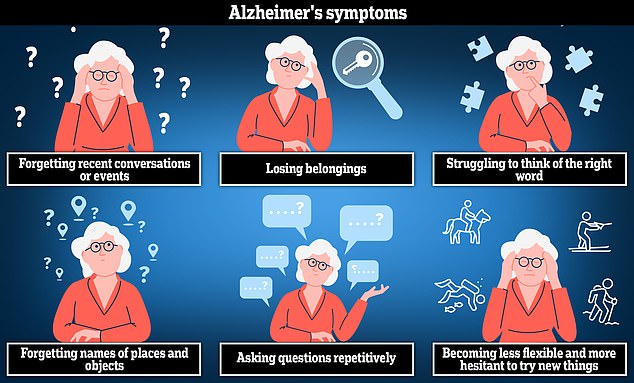
The researchers indicated that their results highlight the significant importance of controlling LDL levels to reduce the risk of dementia, noting that statins might be utilized to enhance cognitive performance.
The medication reduces cholesterol levels by disrupting an essential enzyme in the liver responsible for producing the fatty substance.
Nevertheless, some specialists have advised being cautious regarding these results.
Dr. Julia Dudley, who leads research at Alzheimer's Research UK, stated: "The complexity of dementia risk involves numerous contributing elements."
'In the absence of a clear image of what’s happening in the brain, we can’t determine whether there is a direct connection between lowered cholesterol levels and decreased risk of dementia.'
'Clinical trials will play a crucial role in determining the impact of statins on disease progression within the brain.'
'In the meantime, keeping our hearts healthy remains one of the most effective ways we can protect our brain health.
'In case you have any worries regarding your cholesterol levels, consult with your GP.'
It is widely recognized that elevated cholesterol levels pose a risk for vascular dementia — a condition often triggered by multiple minor strokes.
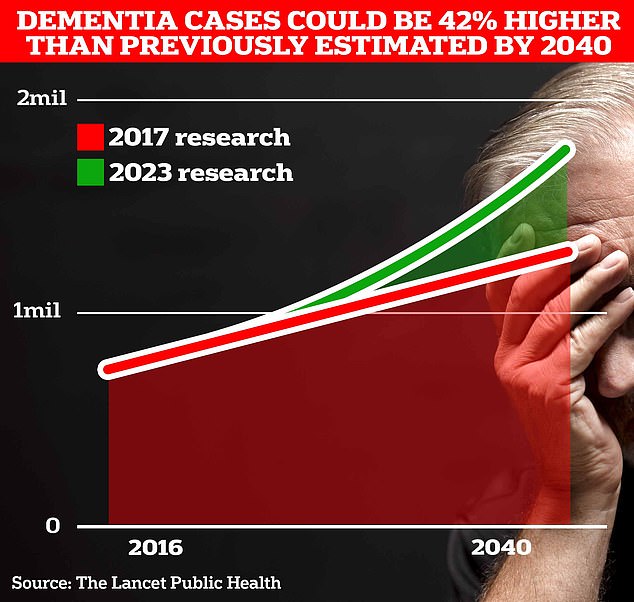
Currently, approximately 982,000 individuals in the UK are living with dementia.
This figure is anticipated to increase to 1.4 million by 2040.
Approximately six out of every 10 individuals with dementia are affected by Alzheimer’s.
Issues with memory, challenges in thinking and reasoning, along with troubles related to language, often appear as initial signs of this condition before progressively deteriorating.
Prior research has suggested that approximately 40 percent of all dementia cases might be avoided through modifications in lifestyle choices.
This encompasses better nutrition, more physical activity, reduced alcohol consumption, prevention of head injuries, and utilizing hearing aids.
Read more