

PC MHA Lela Evans is wondering about Long-term NL students were being taught incorrect information about Indigenous peoples.
In early February, t The Department of Education instructed school administrators to destroy 8,600 Grade 7 and 8 French immersion textbooks.
Based on an article from CBC News , the books were originally bought back in January 2023 for $202,140 It was only recently that it was discovered the books included inaccurate information about Indigenous peoples and their history.
The Department informed The Telegram that "the schools were instructed to dispose of the books to ensure they wouldn’t stay in circulation and potentially spread incorrect details."
They mentioned that it is typical for educational institutions to be requested to discard delisted materials that have become obsolete or are no longer considered appropriate or approved.
"These would typically be chopped up," they explained.
Instances of details that were incorrect or irrelevant to Newfoundland and Labrador encompass:
- Turtle Island is not considered a creation story for every Indigenous people group.
- References to lifestyles were overly simplistic: Eastern communities hunt caribou, while Western ones focus on fishing.
- Certain Indigenous people from Newfoundland and Labrador have not encountered an authentic representation of themselves and the lands associated with them.
- Not all Indigenous communities have clan systems as a method of organization.
- Elder is not age-based.
- The apology issued by Prime Minister Stephen Harper in 2008 did not apply to Newfoundland and Labrador; the one from 2017 wasn’t referenced either.
- Inaccurate statements that no Indigenous peoples pay taxes, all receive free post-secondary education, etc.
'The kids have a say'
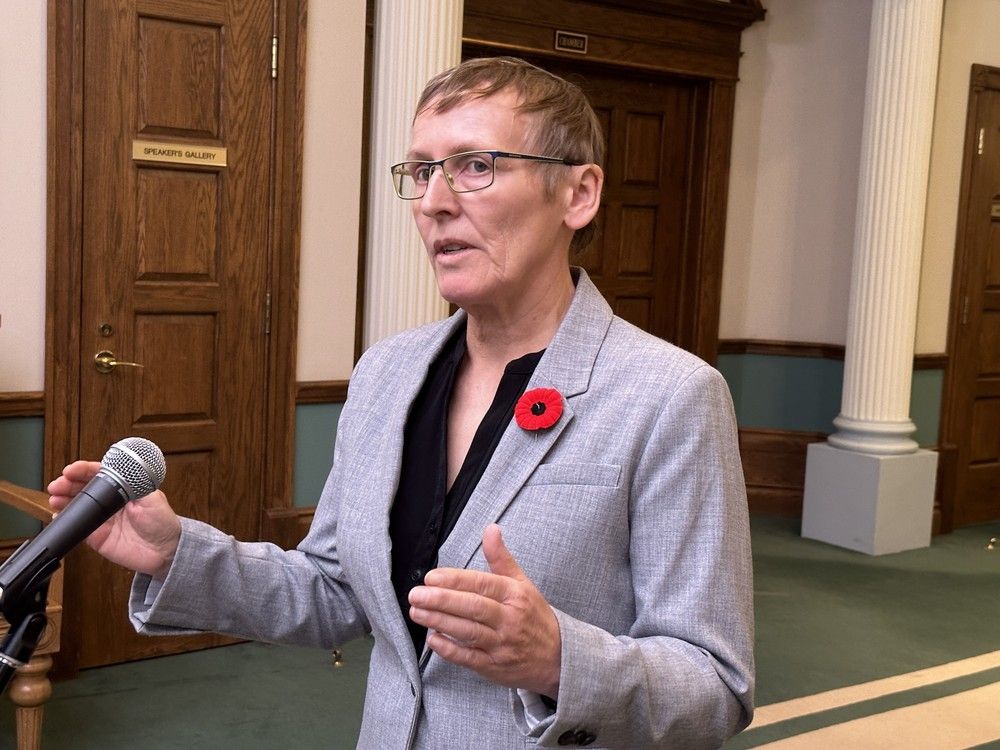
Evans, representing the Torngat Mountains District, is seeking information on when this discovery was made and the duration it took to remove them from schools.
That really demonstrates the value and respect that those in authority positions hold for the Indigenous communities within our province," she stated. "Since often, permitting incorrect information to persist can be more detrimental than providing no information at all.
A frequent challenge Evans faces while advocating for the Inuit and Innu in her district and throughout the province is encountering misinformation among the general populace and occasionally within governmental circles.
That’s where the inaccurate and harmful stereotypes about Indigenous peoples originate," she stated. "It's crucial to introduce correct information that can counter these negative stereotypes into the education system since young people today have an impact on their households.
We observe this phenomenon with climate change, with environmental concerns, and with societal issues as well. Children possess a voice, and once equipped with accurate information, they can truly make an impact from a young age.
It's crucial not to downplay that these texts were used in French immersion Grade 7 and 8 classrooms, noted Evans.
We can't simply brush it off with 'oh, those are just some younger students, no big deal,'" she stated. "These children are shaping their understanding of reality, developing their prejudices, and deciding what matters most to them. Providing incorrect information at this stage might affect them significantly.
'It shows a lack of governmental success'
The incorrect assertion made in the passage stating that “ no Indigenous peoples pay taxes, all receive free post-secondary education” is one of many examples demonstrating the harm that can come from perpetuated stereotypes.
Evans highlights that not only does this reinforce negative stereotypes, but it may also trigger feelings of resentment among non-Indigenous communities.
Evans clarified that taxes are waived solely for First Nations individuals residing on reserves, adding that only a small number of Indigenous people actually live on these territories.
"The Inuit do not fall under this category. To be eligible for exemption from taxes, Indigenous individuals must reside on the reserve," she explained.
What occurs is that you're planting the seeds of misinformation which might foster negative stereotypes capable of leading to racism. The government has failed by not addressing this issue."
The committee is expected to get the books ahead of time.
Jodie Lane, who leads education initiatives for the Nunatsiavut Government (NG), serves on the Indigenous Education Advisory Committee and recently remembered being asked for input on an additional English-language learning tool a few months back.
"The Provincial Indigenous Education Advisory Committee comprises representatives from various Indigenous communities," clarified Lane.
The committee needs to review all resources going into schools with Indigenous content to identify and correct any inaccurate information.
So, from time to time, we receive items for consultation," she explained. "The English translation of what they were using in French appeared at our desk only recently, sometime after Christmas. We all took a collective look at it and raised several concerns regarding its accuracy."
Upon examining the list of individuals who contributed to or were consulted for the book, there was just a single mention of an Inuit consultant.
The four Inuit regions in Canada each possess their own unique characteristics; it’s It’s challenging to pinpoint one specific aspect that represents all Inuit throughout the nation.
"That's quite a significant burden for a single Inuit representative to bear when consulting on such matters," she stated.
And we aren't aware of the extent or thoroughness of that consultation process. They could have just been included as a point of contact without being able to provide substantial input, which occurs occasionally, or they might have preferred to limit their comments to issues pertinent solely to their specific area.
“ It wasn't a good sign to see numerous representatives from various First Nations alongside only one Inuk."
Related
'We weren't aware there was a French edition.'
Lane mentioned that it isn’t hard to locate individuals in education from each of the four areas who can provide insights into the nuances of Inuit culture and history.
The various problems identified in the text primarily stemmed from broad generalizations that could have been prevented if Indigenous groups had been adequately consulted.
In the end, there were sufficient mistakes for the committee to choose against recommending that the province buy and use the English translation of the material within the school system.
We were unaware of the existence of the French edition at that point," she stated. "It’s reassuring to observe how swiftly the provincial authorities removed the French versions. In my view, destroying 8,600 books represents a minimal expense relative to inaccurately portraying Indigenous communities.
I'm pleased that the province took this step. Kudos to them for acting swiftly.
Not utilized to its complete potential
This raises the same queries: When did officials identify the incorrect data in the French materials, and how much time elapsed before these resources were removed from classrooms?
Chad Bedard, who manages Knowledge Mobilization at First Light, stated that the approach is similar to what has been observed with the Indigenous Education Advisory Committee: The provincial government merely needs to utilize the committee to its fullest potential.
I don't think they're utilizing it to its fullest potential," he stated. "I feel they ought to lean more on that group and that committee to assist with this type of work.
It’s somewhat shocking and surprising that they weren’t leaned on more frequently; however, all we can hope for now is that the provincial government utilizes this group and committee with greater wisdom going ahead.
Bedard mentioned that First Light has repeatedly asked to join the committee but has been turned down every time.
Despite this, the group keeps pushing for an overhaul of the kindergarten through grade 12 educational program. This is part of their 42 proposed changes.
He stated that changing the education and awareness regarding Indigenous peoples, our colonial past, and intergenerational trauma will also alter people’s perceptions and beliefs about the origins of these problems.
"We believe it's crucial to revamp and correct the K-12 curriculum since it currently causes more damage than benefits," he stated, emphasizing their disbelief that such an issue occurred initially.
It simply continues historical patterns and disseminates inaccurate information about Indigenous peoples, leading to widespread misunderstanding of the Indigenous issues occurring within our province and throughout Canada.
NG developed a high school two-credit course
Additional actions are required, and some of those actions are readily available.
In 2015, Lane mentioned that the Nutnitsaviut Government created a two-credit high school course titled Inuit Society and Culture.
"This essentially turned out to be a course that the province considered capable of fulfilling both Canadian studies and fine arts requirements through our approach," she clarified.
It is indeed available. We began implementing it in our five schools back in the 2015-16 academic year, and since it is a locally developed program, it has the potential to be offered in any school across the province.
Currently, the course can be accessed at the educational institutions in Nunatsiavut, along with O'Donnell High School located in Mount Pearl, Mealy Mountain Collegiate situated in Goose Bay, and Cloud River Academy found in Roddickton.
Lane mentioned that the course was created as the children in the North Coast communities questioned why they did not recognize themselves within their education.
“Therefore, we decided to create this course, which we will gladly share with you,” she stated.
And I would gladly welcome and utilize course materials from other Indigenous groups to enrich our children’s education here in Nunatsiavut, whether they be from the Innu or the Métis communities within our province.
She stressed that the government should start producing materials itself instead of solely relying on Indigenous groups to create content for their use.
We're still working on addressing these gaps," she stated. "Our province is home to many Indigenous individuals and various distinct Indigenous communities.
There is still considerable progress needed before Indigenous peoples are appropriately included in the curriculum overall. It shouldn’t just be an addition.
The main point is dedication to consulting with the Indigenous communities, she noted.
As long as they keep consulting before events unfold rather than afterward, I remain hopeful.
Anasophie Vallée serves as a Local Journalism Initiative reporter focusing on stories related to Indigenous communities and rural affairs.