
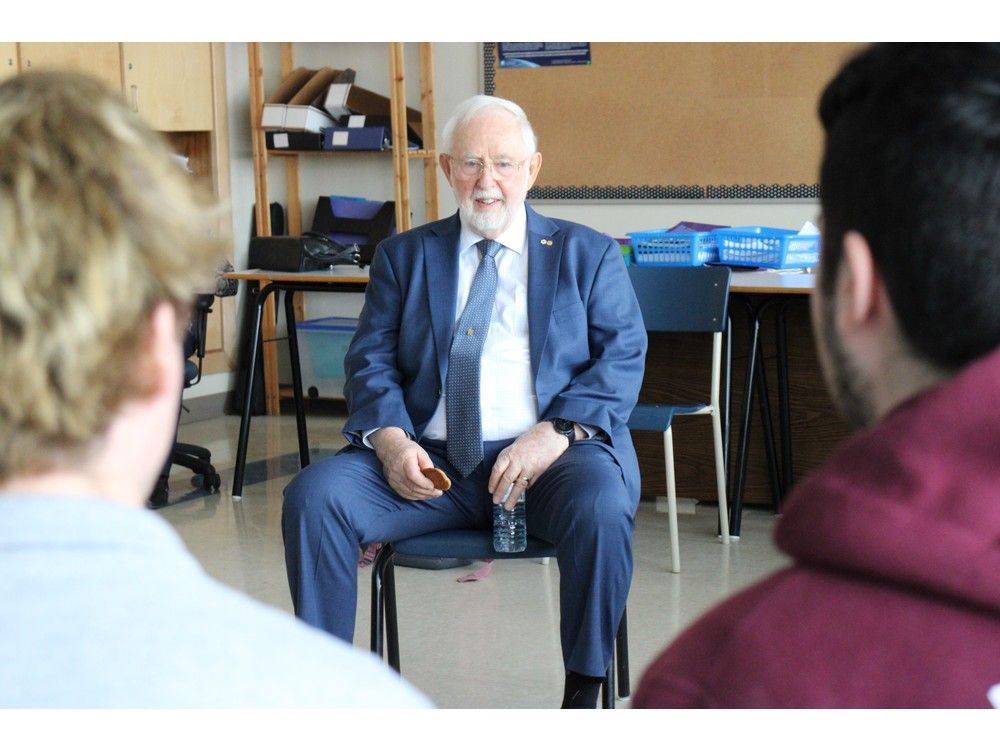
It’s not every day you get to meet a Nobel Prize winner and students at Sydney Academy seized the chance.
On Monday, astrophysicist Arthur 'Art' McDonald, who graduated from Sydney Academy’s class of 1960, returned to the institution to discuss his groundbreaking work in physics. This research ultimately earned him the prestigious award he received. Nobel Prize in physics in 2015 .
He likewise offered his guidance on achieving success to approximately 300 students who were present.
"It was truly incredible to encounter someone as accomplished as Dr. Art McDonald, since I doubt one gets this kind of opportunity very often," stated Oluwatamilore Seriki, a Grade 12 International Baccalaureate (IB) student.
The Nobel Prize is certainly not trivial. Meeting someone with an extensive wealth of knowledge is quite remarkable. Such individuals aren't encountered frequently within a lifetime, making this encounter a rather significant chance.
Related
Seriki mentioned his desire to join the lecture and participate in the Q&A session afterward to gain insights from McDonald.
"To understand the type of mindset, how to conduct myself, and what I should acquire from him," stated Seriki, who intends to pursue computer science at the university level.
I needed to observe his methods, understand his thought process, and learn about his work ethic to see how I could benefit from it and incorporate those lessons into my own life.
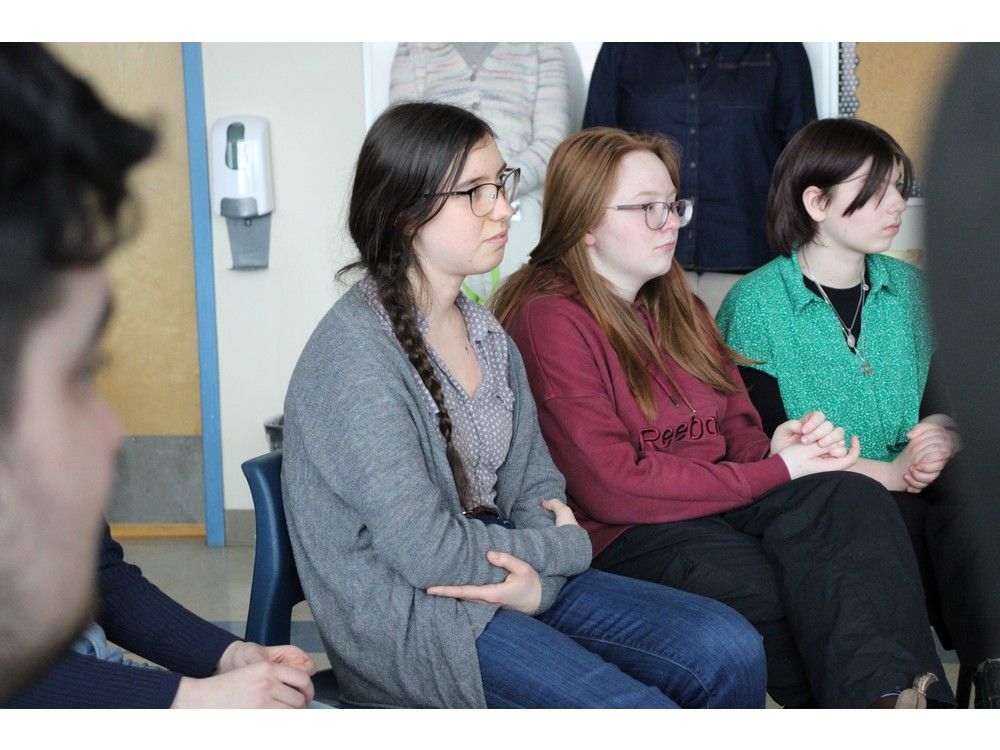
Following the lecture, there was an smaller-scale question-and-answer session exclusively for students.
Katie Milburn from Sydney, a grade 12 pupil at the institution with ambitions to pursue studies in both music and physics at university level, was among those who posed questions. McDonald questions .
"It was incredibly exciting to meet him and listen firsthand about the scientific process in action; it was truly fascinating," remarked the IB student. She added, "It was equally inspiring to hear insights from someone at Sydney Academy who has made significant contributions to Canadian science." The student began her educational journey at École Etoile de l'Acadie.
“It was really interesting to hear him talk about things that are so complicated, but he is so familiar with them that he’s able to explain them in a way that is simple enough for people to understand.”
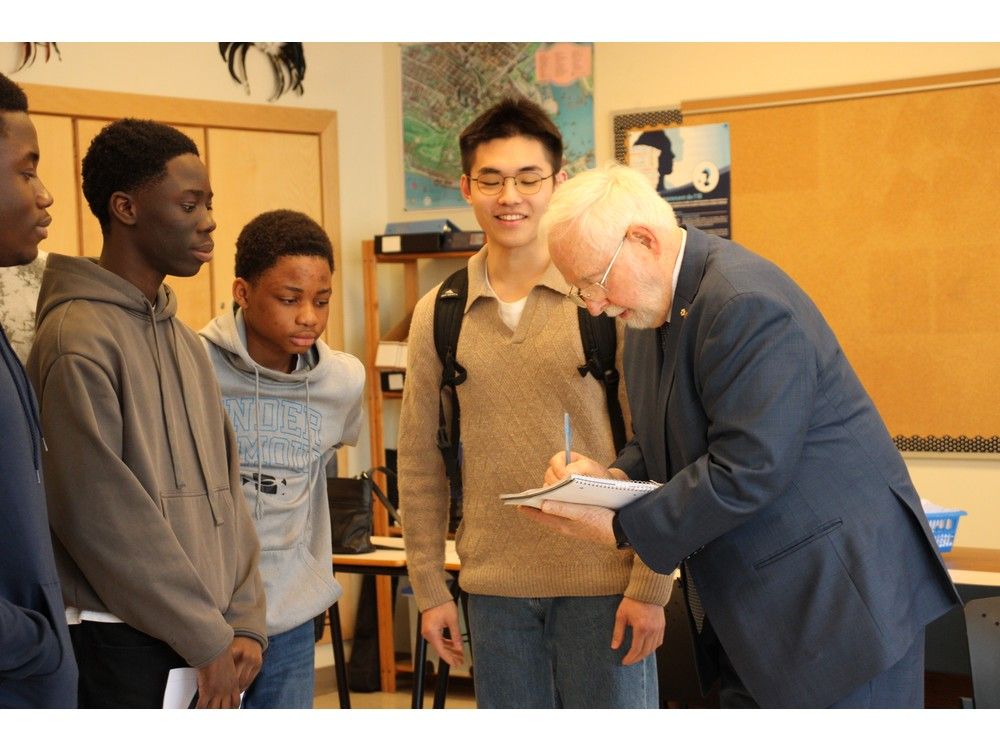
Students lined up to get an autograph and photo with McDonald who co-won the 2015 Nobel Prize in physics with Japanese scientist Takaaki Kajita for their work that redefined the basic principles of particle physics.
Life changing
McDonald smiled remembering when he learned he won the Nobel Prize. The call came around 5:15 a.m. The physicist recognized the Swedish accent immediately.
McDonald had a feeling it was to tell him he and Kajiti won the Nobel Prize, however, the hockey fan spoke about the Toronto Maple Leafs first.
“One of the headlines in the newspapers after that was a typical Canadian learns he wins the Nobel Prize and all he wants to talk about is hockey,” he said.
Macdonald mentioned he turned to his spouse, Janet Macdonald (a fellow alumnus of Sydney Academy), and queried about the implications this accolade might have on their lives.
"It has made a significant impact on our lives… We have traveled extensively across the globe. I've participated in numerous events at Canadian embassies in about seven or eight major cities worldwide. I continue to receive nearly one invitation each week to speak at various locations. For the initial few years, my travel schedule accounted for approximately 60% of my time untilCOVID-19 arrived," he explained.
I am acutely aware that I embody Canadian scientific achievements. Being invited to deliver keynote speeches at various conferences is truly rewarding. Our country boasts an exceptional low-radioactivity lab called SNOLAB located close to Sudbury. Having the opportunity to present this globally highlights how Canada stands out as a leading nation in the field of science.
Following McDonald’s talk at Sydney Academy, numerous students appeared quite impressed with his experiences, his life story, and his achievements. They were notably fascinated by the time commitment required for the work he does.
Someone inquired about his approach to conducting the extensive data analysis and drawing conclusions over a period of around 10 years or longer.
Clearly aimed at students, McDonald's event of the day involved their visit to see the tribute statue newly installed on the premises of Sydney Academy for the first time.
The Queen’s University professor emeritus took time with each student who wanted to talk to him during the question period and after, signing autographs and taking photos.
"I would like to think that some of them might feel motivated knowing that it was possible for me to succeed post-graduation from the Academy, and perhaps some share similar ambitions as I did," stated the 81-year-old.
“I must admit, I didn’t aim for a Nobel Prize when I graduated from here. My intention was simply to advance to university and keep enjoying my studies.”
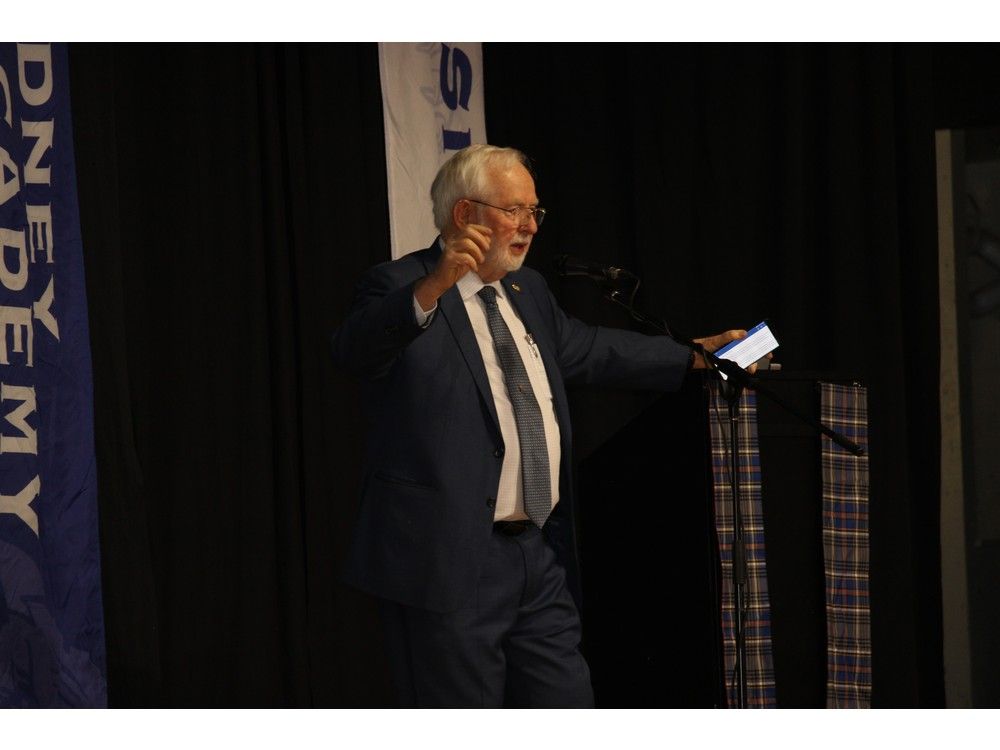
Dr. McDonald's guidance for achieving success
- Stay curious and engaged with what is going on around you.
- Pursue your passions. Embrace the risks and delve into what captures your interest.
- Treat your coworkers well. You achieve greater success when you interact with them as you would like to be treated yourself.
- Shoot for the stars and don't confine your potential. Everyone has the ability to achieve whatever they set their minds to.
Regarding the laureate of the Nobel Prize
Arthur McDonald , who holds a doctoral degree in physics, graduated from high school with a clear interest in mathematics and sciences but was uncertain about which specific field he wanted to pursue.
When a student inquired about his anxiety over uncertainty regarding his future path, he assured them that he didn't feel pressured and advised high school students not to worry either. Instead, he encouraged them to approach college with enthusiasm, ready to discover various possibilities prior to committing to any choices.
Notable accolades
- The initial winner of the Nobel Prize from Cape Breton
- The fourth individual from Canada to be awarded the Nobel Prize in Physics.
- In 2009, Nova Scotia native Willard Boyle was awarded the Nobel Prize in Physics due to his contributions that paved the way for digital photography.