
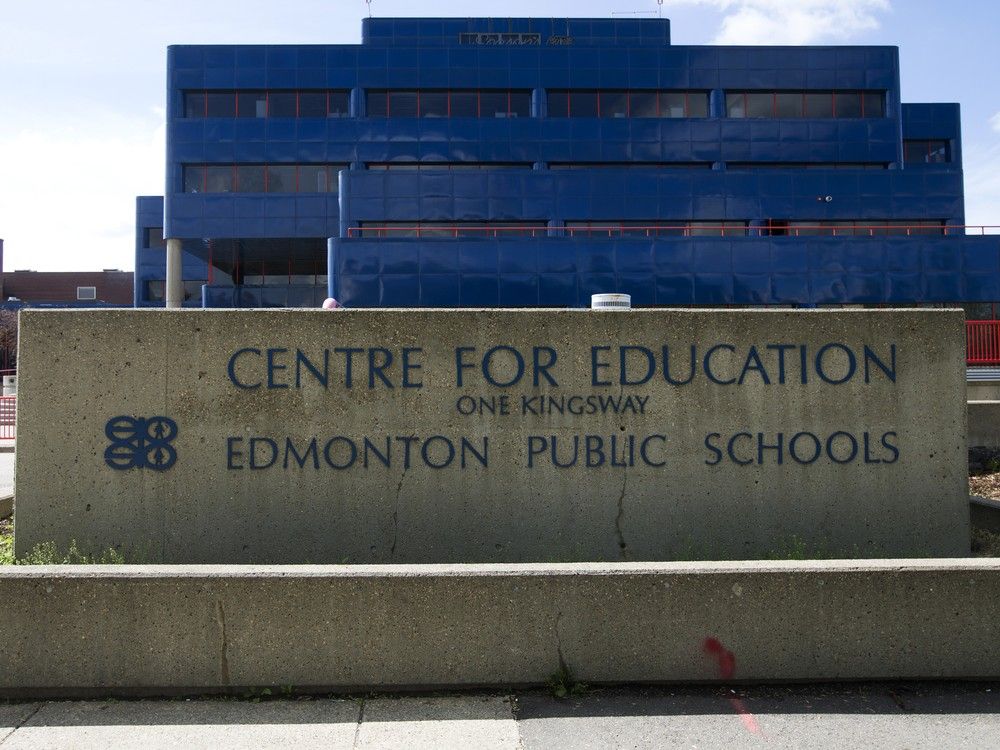
The Edmonton Public Schools (EPSB) has published its 2024–2025 class size report, offering an in-depth analysis of the average class sizes over a three-year period along with notable patterns regarding pupil-to-instructor proportions within each division. Overall, the data indicates that class sizes have remained consistent across all four divisions throughout the past year.
The document arrives amid the region dealing with quick rises in student enrollment and getting ready to launch new educational institutions to tackle growing needs.
In high schools, class sizes are getting smaller, but junior highs have bigger classes.
One key observation in the report was a decrease in high school class sizes, leading to speculation about whether the opening of a new high school contributed to the trend. Superintendent Darrel Robertson noted that while new school openings could have an impact, there was no direct cause-and-effect relationship.
It’s quite challenging to discern patterns from this yearly report," he stated. "Indeed, we did incorporate Elder Dr. Francis Whiskeyjack School. Generally, however, when setting up high school timetables, they generate necessary segments as required. Thus, it might have influenced things, but it isn’t definitively a clear-cut causal relationship.
On the contrary, junior high schools noted some of the biggest class sizes, with a single class accommodating up to 56 students. Robertson attributed this rise primarily to the district’s expansion.
"Probably this school will move up to a more advanced stage in the growth control model during this upcoming pre-enrollment year. They expect to see more drop-in students than initially anticipated. As usual, we aim to enroll as many children from the local area as possible. While that isn’t perfect, there simply isn’t extra room to divide the classes," he explained.
He stated that the report "would not reflect the staff members who are associated with that," noting that in certain instances, the school might introduce extra assistance like educational aides or collaborative teaching approaches.
In many cases, large classes are common in specific areas like leadership studies, instrumental music, choir, theater, and musical productions, because keeping all students together is deemed crucial for effective teaching.
Trends in class sizes throughout different grade levels
The report similarly highlighted a decrease in the number of students categorized under special groups like English as an Additional Language (EAL) and those with intricate requirements as they advance through grades. According to Robertson, the structure of high school programs along with funding regulations play a role in this trend.
We would establish routes for students aiming for university. For others heading towards work through education, we’d set up distinct paths too. Additionally, we'd include programs focused on knowledge and employment skills. There will also be specific facilities catering to students with special needs and district centers," he explained. "All of these elements contribute to the overall figures.
EAL students are funded for just five years, which naturally reduces their count over this period, he explained.
The report highlighted an uptick both in the proportion and total count of classes containing 26 to 30 students and 31 to 35 pupils within Division 1. Comparable growth was seen across Divisions 2 and 3 specifically for classroom sizes between 31 and 35 students. Although the document does not distinguish among specialized courses like French immersion or Cogito, it encompasses data related to special education classes. In terms of team-teaching scenarios, these are counted based on "student-to-teacher ratio," so a single session with 50 learners under dual instruction would be recorded as two separate groups each having 25 students.
A request for adopting a fresh method of reporting
The board chairwoman, Julie Kusiek, highlighted the necessity for a more sophisticated method of reporting class sizes. This new approach should capture the intricacies and real-world challenges present within the changing environment of Edmonton Public Schools.
I believe it's crucial that we examine this report from fresh perspectives since our reality is shifting due to the swift increase in enrollment and the growing shortage of space," Kusiek stated. "We're aware that our class sizes are substantial, and we're putting significant effort into easing these spatial constraints. Additionally, we recognize the rising intricacy within classrooms.
She mentioned that although the present reporting structure offers significant information, an updated method might better capture the true narrative of what is occurring in classrooms.
"How could we reshape this report to more effectively convey what's currently unfolding within Edmonton Public Schools? For instance, consider how presenting a single large class of 56 students might be interpreted differently depending on whether it’s an ensemble music class rather than a Chemistry 20 course," she remarked.
Additional assistance is required for bigger classrooms.
To address worries regarding adequate assistance for educators handling bigger and more intricate class sizes, Kusiek stated that the board is striving "to provide as many supports as possible to classrooms and students using the resources at our disposal."
"And naturally, the board of trustees continuously strives to advocate for increased support for public education by engaging in discussions with the government about expanding resources," she stated.
cnguyen@postmedia.com