
- EXPLORE FURTHER: The Frequency of Exercise Required to Combat Over 200 Ailments
Exercising only two days each week might be sufficient to ward off cancer and heart disease, according to a new study.
Researchers from around the world discovered that engaging in at least 150 minutes of moderate to intense physical activity can be beneficial. engagement in physical activities across two days offered comparable health advantages to exercising throughout the whole week.
Individuals who engaged in physical activity solely on two days exhibited a 32 percent reduced likelihood of succumbing to any cause of death, a 31 percent decreased probability of passing away due to cardiovascular diseases, and a 21 percent lowered risk of mortality resulting from cancer.
The American Heart Association suggests that adults should perform approximately 150 minutes per week of moderate-intense aerobic exercise, or opt for around 75 minutes per week of intense cardio activities, with options also including a mix of both types; ideally these exercises should be distributed across the week.
Nevertheless, this research indicates that 150 minutes can be equally effective when completed over merely two days.
Dr Zhi-Hao Li, an epidemiologist at Southern Medical University in Guangzhou, China The study's corresponding author remarked: "It isn't necessary to work out daily to maintain good health."
'As long as you accumulate at least 150 minutes of moderate to intense physical activity each week – be it concentrated within one or two days or distributed evenly – you can considerably lower your chances of succumbing to heart-related diseases.' cancer or other causes.'

The research, featured in the Journal of the American Heart Association, categorized approximately 100,000 individuals from the UK aged between 37 and 73 into three distinct groups.
The categories comprised 'active weekend warriors' — individuals who performed most of their physical activities in one or two days; 'active regulars' — those who distributed their workouts evenly across the week; and finally 'inactives' — participants who failed to reach 150 minutes of weekly exercise.
The researchers proceeded to analyze seven days of physical activity data recorded by an accelerometer—a gadget designed to measure motion—as well as health-related information spanning from 2013 through 2015.
The sensors recorded various actions like walking, running, indoor cycling, using an elliptical machine, doing housework, tending to the garden, and enjoying recreational pursuits such as dancing.
According to the data, more than 42 percent of participants fell into the category of weekend warriors, approximately 24 percent were deemed active regulars, and almost 34 percent were consideredinactive.
The gathered information was subsequently assessed to determine how various patterns of physical activity might influence the likelihood of mortality due to all causes, cardiovascular conditions, and cancers.
The risk associated with each condition was calculated utilizing the International Classification of Diseases, Tenth Revision — a worldwide system employed for categorizing causes of death from a medical standpoint.
When compared to those who were inactive, individuals in both the weekend warrior and active regular categories experienced a notably reduced chance of dying prematurely due to various reasons, heart-related conditions, and cancers—provided they engaged in at least 150 minutes of exercise each week, regardless of whether this activity was condensed into one or two days or spread out across the entire week.
In the active regular group, the likelihood of dying from any cause was reduced by 26 percent; the chance of dying from heart-related diseases decreased by 24 percent, and the probability of succumbing to cancer dropped by 13 percent.
According to the conclusions, Dr. Li commented: "This finding is good news for individuals with hectic schedules who find it challenging to incorporate regular exercise into their routine but can manage to engage in intense physical activities during weekends or over a few consecutive days."
The study offers comforting proof that even irregular exercise can yield long-term health advantages, simplifying efforts for individuals to focus on their wellness despite hectic timetables.
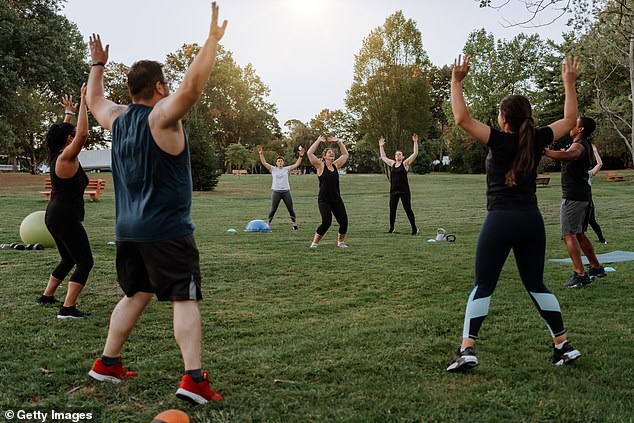
Working out at least two times per week can aid in fortifying the cardiac muscles, enhancing their efficiency in circulating blood. This reduction in workload helps decrease the likelihood of encountering elevated blood pressure and cholesterol levels.
It may also stop the body from developing Type 2 diabetes, mental health issues like anxiety and depression, arthritis, and various cancers such as those of the kidneys, lungs, and stomach.
However, despite promising results about weekend workouts, it's important to be mindful of potential injury risks, especially if you have not been active during the week.
Dr Keith Diaz, a physiologist at Columbia University who was not involved in the study, warns weekend warriors may be at a slight risk of musculoskeletal injuries and should practice good measures to prevent damage.
In the agency's statement, he clarified: "A key point to keep in mind is that cramming 150 minutes of physical activity into only one or two days can put significant strain on your body."
Some studies indicate that individuals who engage in physical activity only during weekends might face a somewhat elevated chance of experiencing musculoskeletal injuries when contrasted with people who work out more consistently throughout the week.
'The advantages of working out solely during weekends significantly surpass the possible drawbacks. Should you choose to become a weekend warrior, ensure you perform adequate warm-up routines and gradually increase your activity levels over time.'
'This will assist in lowering your chance of getting injured.'
Read more