
Caution: The following narrative includes disturbing content.
As a child in northern Manitoba, Willie Sinclair's cousins would often teasingly poke fun at him and his brothers and sisters for not being able to speak Cree.
Sinclair recalls today, "We never truly grasped the reason behind this. I couldn't interact with my grandparents as they did not comprehend the English language."
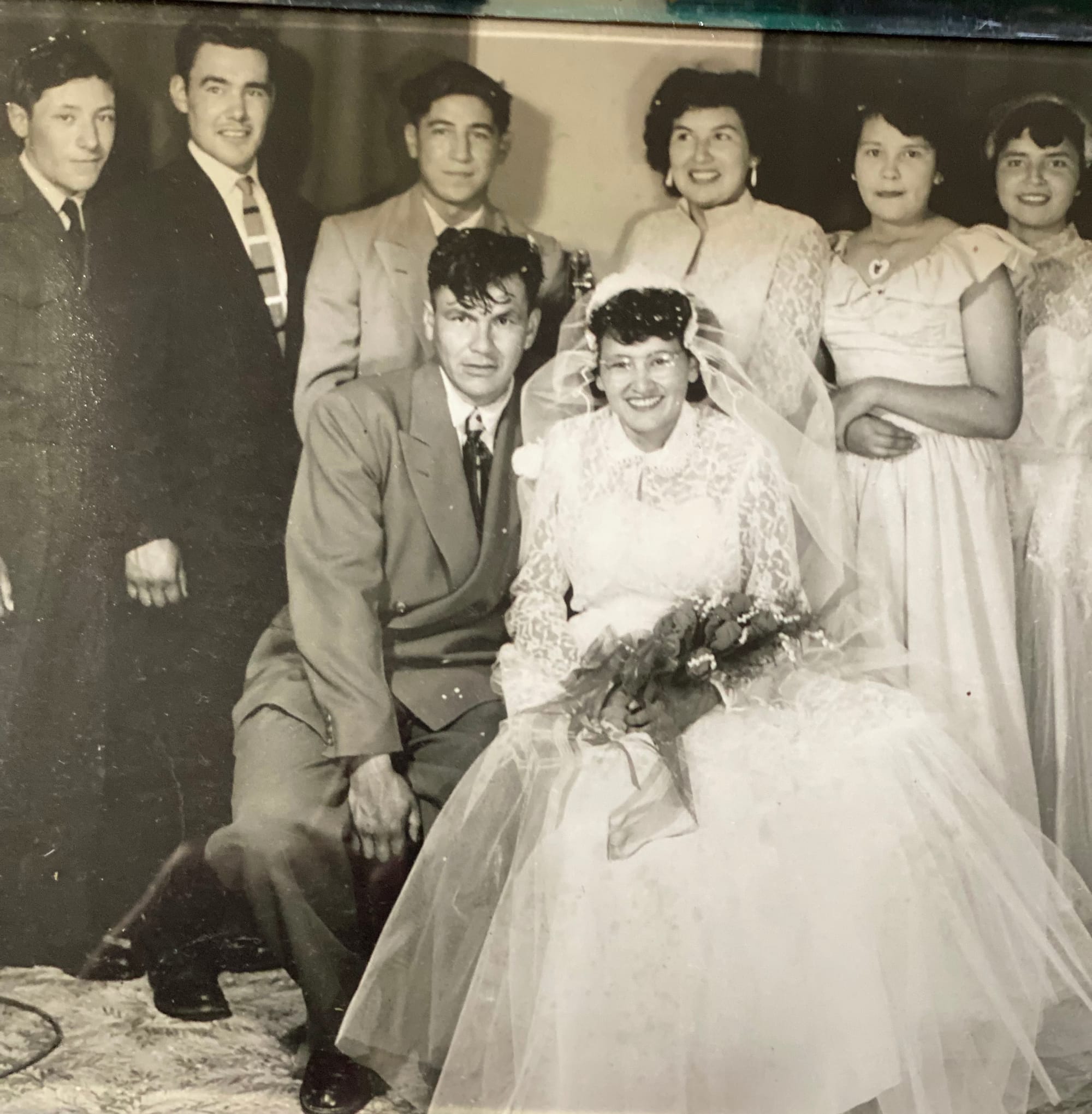
Everything he understood was that his mother had prohibited him from studying her language. Named Jessie Mary Florence Whitehead at birth, she went to the Elkhorn school close to The Pas, Manitoba, prior to being transferred to Clearwater Lake Indian Hospital, an adjacent tuberculosis sanatorium.
"My mother never discussed the residential school issue with me. As a result, when I was younger, none of these matters really made sense. It wasn’t until I grew older and attended university that things started to become clearer," Sinclair explained.
Now he realizes she was attempting to shield him from the experiences she herself had been compelled to endure.
Documents The records in the IJF’s residential school database encompass over twenty years of reports from parents, healthcare providers, and governmental officials that depict a grim reality for the children at Elkhorn. These accounts detail insufficient food supplies, dilapidated structures, excessive crowding, and kids suffering in tattered, filthy clothes.
"I am sorry but I must report that the circumstances at the Elkhorn Residential School were entirely unforeseen by me," stated Dr. A.B. Simes, who was the medical superintendent for the Qu'Appelle Indian Health Unit. wrote after a 1944 visit.
The historians consulted for this article characterized the information in these papers as shocking yet expected. They emphasized that these records are essential for grasping the daily life experienced by children at residential schools and how worries regarding their security and welfare often met with deliberate neglect from those tasked with caring for them.
"Once we examine the fundamental circumstances and gain insight into what they entail, it becomes clear just how underprivileged these children truly were," stated Crystal Fraser, a University of Alberta professor whose research focuses on the residential school system.
What does it feel like to experience being vulnerable, famished, or unwell? How does it feel to face segregation based on gender and age, unable to find solace with your brothers or sisters during times when you desperately require support?
Sean Carleton, an Indigenous studies professor at the University of Manitoba, noted that the numerous grievances recorded against Elkhorn could aid in dispelling the misconception that residential schools were genuinely benevolent initiatives that later appeared detrimental when viewed from a modern perspective.
"This is merely an illustration of how individuals back then understood that this system was flawed," he stated to the IJF.
I hope I could have a seat with Canadians and propose reading this together, as doing so would reveal not only the deplorable state of the schools but also how various officials attempted to minimize worries regarding the system. Throughout all this, children are suffering most from these adverse circumstances.
'That’s when my mother began to let go.'
The majority of the documents within the IJF’s residential school database consist of "narrative" accounts developed specifically for this purpose. Independent Assessment Process (IAP) to settle claims of abuse made through a series of class-action lawsuits filed by survivors.
The files within the database shed light on fresh information regarding the system, such as a concealed scandal involving sexual assaults at a school in Manitoba, alarming levels of hearing impairment reported amongst pupils in British Columbia, and rosters of personnel found guilty of misconduct which were not disclosed to numerous victims throughout their IAP proceedings.
Sinclair's mother, Jessie, submitted an application for compensation, which was rejected since the evaluators did not think she had been a student at Elkhorn. She lacked concrete evidence of her enrollment, and her brothers and sisters had gone to a separate residential institution.
Sinclair's sibling, Moneca Sinclaire, recalls their mother experiencing feelings of anger and hopelessness after her application was turned down.
I believe that’s around the time my mother began to lose hope," Sinclaire shared with the IJF in another interview. "Soon afterward, she became seriously ill. Later, she was diagnosed with cancer and ultimately passed away because of it.

Sinclaire mentioned that, to her knowledge, her mother shared her experiences at the residential school with just one individual, who was explicitly asked to keep it confidential.
The nearest Sinclaire came to grasping what occurred at Elkhorn was by hearing other survivors talk about their experiences at a conference several years back.
I understand what my mother experienced," she stated. "As those individuals shared their experiences, one could sense the anguish in their tones and the sorrow they carried. They recognized that they might have parented their children differently and improved many aspects, yet they also grasped that their approach was shaped solely by how they themselves had been brought up in the residential schools.
'The Indigenous people have all the reason to voice their concerns.'
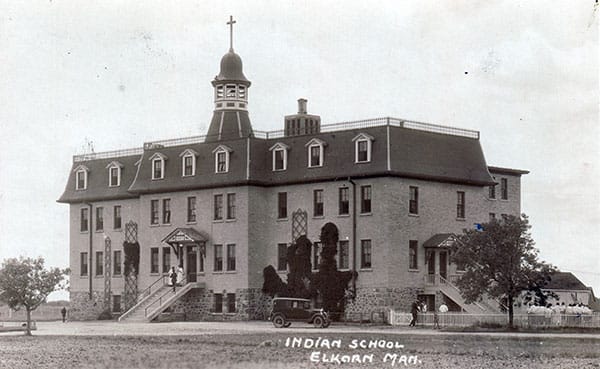
The Elkhorn Residential School initially opened in 1889 in the village bearing the same name, approximately 100 kilometers west of Brandon, Manitoba. Throughout much of its history, it was managed by the Anglican Church.
The stories shared by the IJF reveal grievances regarding Elkhorn stretching as far back as at least 1925 When a visiting nurse penned a report critiquing the circumstances and care provided for the children, a school inspector refuted this document in a correspondence to the federal authorities. He alleged that the nurse was aligning herself with "troublemakers" and overstepping into affairs that did not concern her.
However, just one year later, the local Indian agent penned another letter to the Department of Indian Affairs, stating that the children had come back home for thesummer in “ very bad shape ," probably due to tuberculosis. He requested an inquiry into several grievances raised by parents concerning inadequate meals and subpar sanitation, stating that "If even half of what I'm hearing is accurate, there must be issues at the Elkhorn School."
Those concerns were also dismissed by Ottawa as “in the main, ill-founded ,” and officials suggested they were motivated by parents’ desire to keep their children at home.
By the end of the 1940s, though, the grievances had become so serious and plentiful that they could not be overlooked.
Head chief and council of the Opaskwayak Cree Nation wrote a letter to the government in 1944 explaining that a group of parents had recently visited Elkhorn, and what they witnessed was “so bad that it was utterly impossible for anybody to believe unless one actually saw it with his own eyes.” That included broken and clogged toilets, beds held together by girls’ stockings, clothing that was falling apart and just two towels to be shared by at least 30 boys, according to a government official who met with community representatives.
"They refrained from forcefully presenting their concerns to the principal because they believed he would retaliate against the young individuals once everyone had departed," wrote D.J. Allen, the superintendent of reserves and trusts. 1944 memo describing the meeting.
The most severe of these concerns were substantiated when Simes, the medical superintendent for the local health authority, visited Elkhorn subsequently that year.
"The Indigenous people have ample reason to voice their concerns. It is commendable how they have approached having these issues addressed with such dignified conduct," Simes noted in his report, which was part of the database.
- Another step towards uncovering the truth: IJF database reveals fresh information regarding Canada’s residential schools
He proceeded to depict a grim scenario characterized by shattered and filthy windows, tattered clothes scattered both outside and inside the structures, "unsanitary" mattresses, and toilet stalls devoid of seating. The unappealing food primarily comprised beans and bread without any accompanying butter. Shockingly, an unsettling 69.9 percent of the boys exhibited signs of being underweight.
“Regardless of where the children were approached—at their desks, in the cafeteria, around the school grounds, or outside on the play area—they appeared unkempt with soiled attire that was unsightly. Their garments were not just filthy but also tattered and worn down,” observed Simes. “A significant number of kids engaged in outdoor activities seemed partially frostbitten.”
He demanded "strong measures" to address the school's various issues; however, it seems minimal advancement was achieved during the remainder of Elkhorn's tenure.
In 1948, the chief and council complained again The report mentioned that children at the school were infested with lice, the meals provided were insufficient, and a girl lost her feet due to frostbite. During his visit to Elkhorn later that same year, an official from the government noted that "the sanitary conditions pose a significant risk to public health."
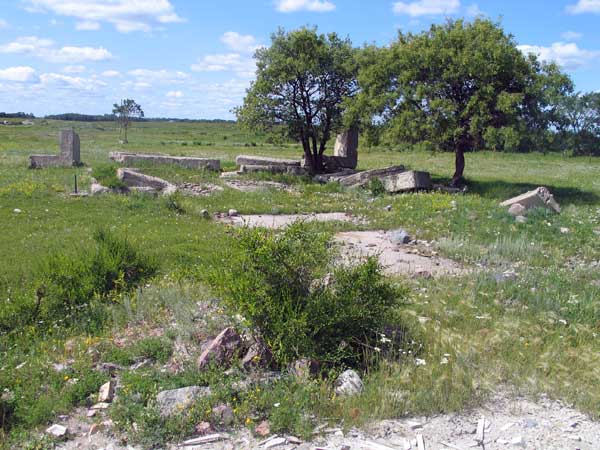
By 1949, the school had been shut down.
'It wasn’t that people were unaware'
For Carleton, the Elkhorn narrative evokes associations with the work of Dr. Peter Henderson Bryce A public health physician who examined the circumstances within Canada’s residential schools during the early 1900s. Alarmed by the rampant spread of tuberculosis and various other illnesses, he continually advocated for changes but was eventually removed from his position with the government.
In 1922, Bryce released his research outcomes in a book titled The Tale of a National Wrongdoing .
That is what makes the system so horrifying," Carleton stated. "The issue isn’t that people were unaware of its detrimental impact; rather, it’s that they recognized its adverse effects yet still chose to reinforce the system regardless.
- The death of Carrie George is widely known. Then why did Canada hide it from the records of residential schools?
Given what she knows now, Sinclaire wishes for an opportunity to inquire of her mother what provided her with the courage to persevere at Elkhorn.
"There must have been some reason for her to endure that circumstance. Some factor surely assisted her in navigating through it," she stated.
A helpline dedicated to supporting those affected by Indian Residential Schools (1-866-925-4419) operates around the clock and is accessible to anyone who needs emotional assistance due to their experiences at these schools.