
- EXPLORE FURTHER: NASA Astronauts Appear Significantly Healthier in Their Initial Public Appearance
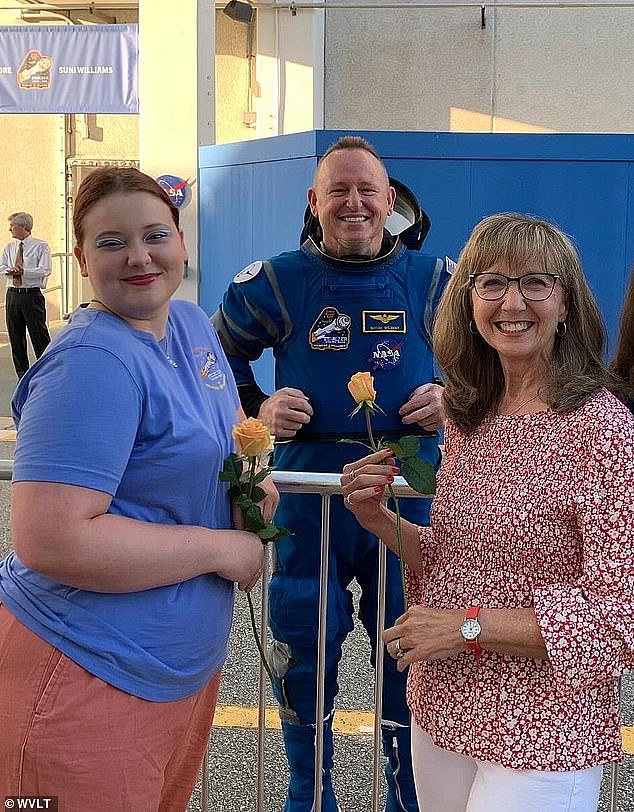
The teenaged daughter of NASA Astronaut Butch Wilmore has addressed his struggles with health issues. following an extended stay of over nine months in space .
Daryn Wilmore, 19 He mentioned that even though her father has been adapting to gravity, he has been having difficulties with his muscles, joints, and inner ears.
"That's because he isn't accustomed to gravity or having to support his own weight," she replied to a remark made in the discussion. TikTok video.
Wilmore and his fellow astronaut, Sunita Williams, were originally slated to spend eight days together onboard. International Space Station (ISS), but remained unattended for 286 days once the vessel that transported them broke down.
Studies have indicated that astronauts undertaking extended missions aboard the International Space Station – typically lasting half a year – encounter muscle and bone deterioration along with alterations in fluid distribution within their inner ears because of reduced gravitational conditions.
Usually, it requires just a few days for the inner ear to adapt back to Earth's gravitational pull; however, recovering one’s physical strength might take anywhere from weeks to several months.
It may require as long as one and a half times the duration of their space mission for some ex-astronauts to truly regain their sense of self.
On Monday, Wilmore appeared fit when making his initial public appearance since coming back to Earth; however, his daughter’s remarks indicate that he may encounter several hurdles in the days to come.
Astronauts aboard the International Space Station encounter changes in fluid distribution within their inner ear, which can lead to various effects. interrupt hearing, affect balance, and result in motion sickness or vertigo .
"Essentially, your inner ear becomes somewhat inactive in zero gravity," said NASA flight surgeon Dr Natacha Chough. NPR .
'When you bring back that feeling of seriousness, it might feel somewhat confusing.'
When astronauts come back to Earth, it might take several days for their inner ears to adapt to regular gravity conditions again. To speed up this process, they could engage in specific walking exercises.
Former NASA astronaut Leland Melvin, who participated in two missions to the International Space Station, revealed to NPR that he needed to initially walk in a straight line before slowly beginning to turn.
'The moment you begin spinning, your balance mechanism gets disrupted, causing you to lose equilibrium and potentially tumble down,' he explained. 'Hence, you should move forward first, then make a turn; go straight again before making another turn.'
When residing on the International Space Station, astronauts undergo considerable muscle and bone deterioration as their bodies adapt to the lack of gravity. need to put in equally rigorous effort even in low gravity .
To minimize these effects, they work out for a minimum of two hours each day aboard the space station. However, upon returning to Earth, they require rehabilitation to assist them in reaching their pre-flight condition again.
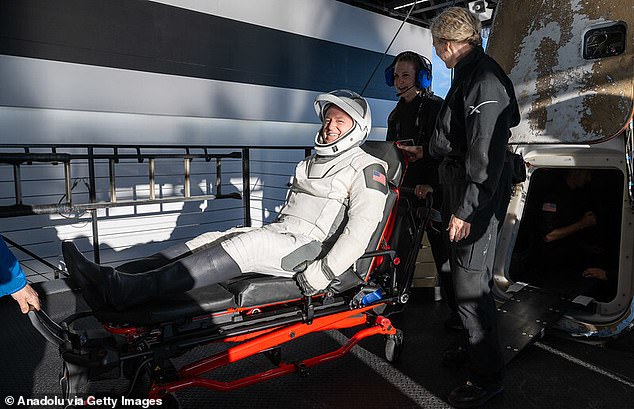
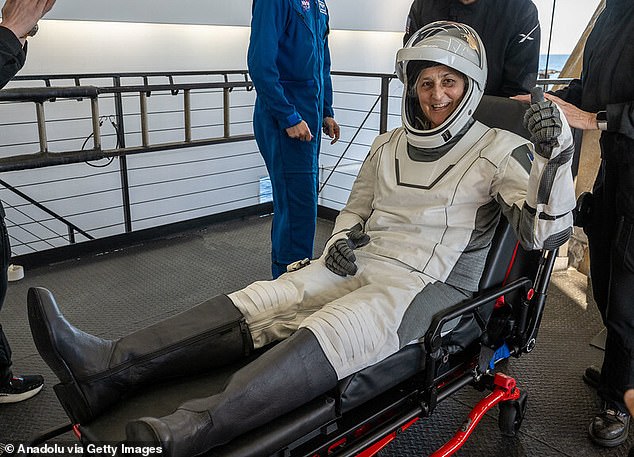
On March 18, Wilmore and Williams ultimately made their return to Earth, landing off the coast of Florida within a SpaceX Dragon capsule.
It’s probable that this duo will go through NASA's 45-day refurbishment program, divided into three stages, necessitating they work out for two hours each day, every single day of the week.
In phase one, the emphasis is on restoring strength, enhancing flexibility, and acquiring the capability to walk again. This could involve engaging in gait training activities, performing range-of-motion exercises, and practicing with obstacles.
After the astronauts have achieved adequate advancement, they proceed to phase two, incorporating proprioceptive exercises along with cardiovascular reconditioning.
Proprioceptive workouts enhance both your physical strength and your brain’s understanding of how your body is moving and positioned. Instances of these exercises encompass backward lunges, toe taps using a resistance band, and sumo squats combined with leg lifts.
In stage three, which is the most extended part of the program, efforts are concentrated on restoring the astronaut’s peak physical condition via exercises aimed at enhancing functionality. This process aids them in reclaiming essential skills and competencies required for both professional duties and seamless integration into everyday activities.
Upon their return to Earth, Wilmore and Williams were quickly assisted out of the Dragon capsule and placed on stretchers before being rolled away for medical examinations.

This follows the usual protocol for astronauts returning from extended stays on the International Space Station, but the immense force of gravity was clear as both individuals found it difficult to lift their limbs.
NASA released images of Williams and Wilmore the following day after their splashdown, depicting them standing and walking. However, Williams appeared notably weak.
After being back on Earth for about two weeks now, they appear to be adapting swiftly.
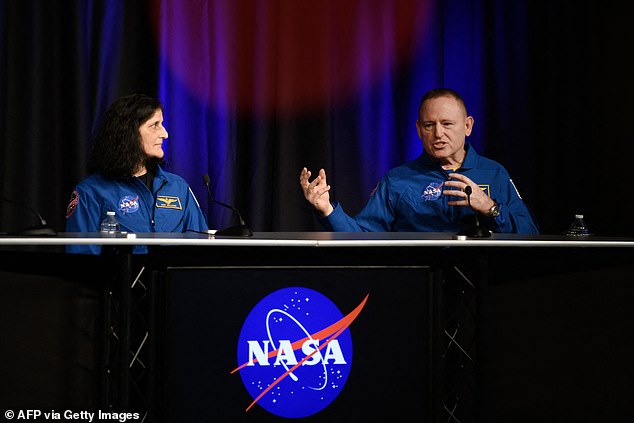
On Tuesday, the astronauts had their initial public engagements following their splashdown, taking part in a NASA press conference and an interview with Fox News. They both appeared to be in good health and spirits.
Williams, who previously raised health concerns because of pictures showcasing her noticeable weight loss during her time on the ISS, mentioned that she was able to begin jogging after only two weeks back under Earth's gravitational pull.
At the press conference, Williams stated: "It’s almost like a miracle to observe how the human body adjusts."
Read more