
- The Australian stock market experiences an $115 billion drop
- The Australian dollar fell below 60 US cents similar to the early stages of the COVID-19 pandemic.
- PODCAST: Trump's 'Freedom Day' Tariffs, along with an unexpected push for the death penalty in the Luigi Mangioni case. Tune into Welcome to MAGAland here.
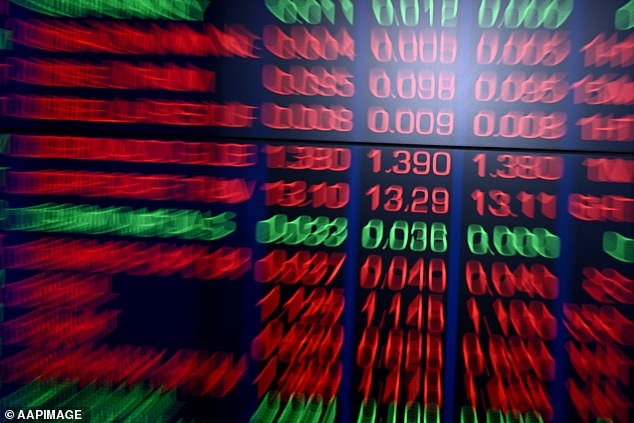
The Australian stock market experienced a sharp decline of 6.4 percent during early trading, marking its poorest beginning to a session in the past five years since the onset of the COVID-19 pandemic.
Investors were preparing for a potential $115 billion drop on Monday. Donald Trump 'Tariffs spark concerns over a potential worldwide economic downturn, with initial losses totaling approximately $187 billion.'
The benchmark S&P/ASX200 plummeted 6.4 percent within the initial 10 minutes of trading, dropping to 7,113.0 points, as technology, mining, and banking sectors experienced the steepest declines.
This was even more disappointing than the futures market prediction on Monday morning. A decrease of 5.11 percent to 7,387.5 for today.
If that forecast comes true, over $115 billion could vanish from investments in the Australian stock market.
Technology shares are taking a hit as Life360 drops 10.99 percent in morning trading to $16.10, despite tripling in value over the previous year.
In 2024, ZipCo, which was Australia’s top-performing stock, experienced a significant drop of 12.45 percent in its share price, bringing it down to $1.12. This decline came alongside BHP, a major mining company, which also took a hit, falling by 9.13 percent to reach $33.46.
The Commonwealth Bank Australia's largest home loan provider experienced an 8.5 percent drop in its share price to $140.90.
In another bad sign, the Australian dollar has also slipped below 60 US cents for the first time since the start of the pandemic in March 2020, stirring fears of higher inflation As imported goods get pricier.
The Chief Commercial Officer and Market Strategist at Moomoo, Michael McCarthy, stated that this indicates global investment sentiment is being jeopardized.
"The Australian dollar is indicating, at minimum, that we are already in crisis mode," he stated to Daily Mail Australia.
'Many individuals have been discussing purchasing dips — this strategy has proven quite beneficial for folks over the past several years; however, the Australian dollar strongly suggests that currently might not be the ideal moment to do so.'
The currency's performance is linked to global growth trends, as commodities lead Australia’s major exports.
The value of the Australian dollar has dropped below even what was seen following the collapse of America’s Lehman Brothers back in September 2008. In response, the Reserve Bank stepped into the foreign exchange market with the aim of maintaining its rate above 60 US cents.
Mr McCarthy stated that the introduction of fresh US tariffs, such as those set at 34 percent for China and 10 percent for Australia, has ignited concerns about a worldwide economic downturn and a return to 1970s-style stagflation—where both inflation rates and joblessness remain elevated simultaneously.
'Tariffs are the issue – there’s no doubt about it,' he stated.
The worry here is stagflation, and the tariffs contribute to both aspects of this issue because they raise prices, boosting inflation, and also disrupt the worldwide economy.
'Thus, a sluggish economy coupled with increasing costs represents a significant economic crisis for all involved. This explains why markets are adjusting so intensively, as the outlook for 2025 has shifted dramatically, especially following the implementation of new tariffs.'
Mr McCarthy stated that financial markets currently view the likelihood of a worldwide recession at fifty-fifty.
'There’s a genuine risk involved: several international analysts currently estimate that there's more than a fifty-fifty probability of us sliding into a worldwide economic downturn,' he stated.
'When the worldwide economic situation, especially within the United States and China, faces strain, it becomes unavoidable for the Australian economy to also feel the pressure.'
Technology shares are anticipated to perform poorly on Monday.
"Growth-oriented shares are especially susceptible at present, which implies that those formerly attractive tech stocks will probably face significant stress," stated Mr McCarthy.
'Previously dazzling, cutting-edge stocks will lead the sell-off, however, sectors focused on growth – especially areas such as mining – are also expected to face significant pressure.'
On Friday, gold dropped from its peak level of $US3,155, and it appears that not a single sector of the Australian stock market will escape impact today.
'Chances are extremely slim for anyone to get away,' he stated.
Coles and Woolworths defied the downward trend on Friday.
"He mentioned that both in Australia and the US, the only stocks that performed well were these consistently stable domestic companies such as supermarkets and home retail stores," he stated.
However, on Monday morning, Woolworths decreased by 2.38 per cent to reach $30.39, while Coles declined by 2.08 per cent to hit $20.69.
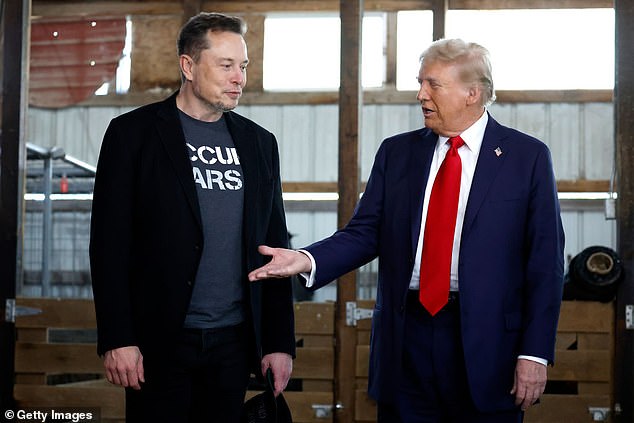
Multimillionaire Elon Musk is apparently so furious about the Trump Administration's tariffs that he plans to step down from his role at DOGE, the Department of Government Efficiency, which aims to slash US$1 trillion in government expenditures.
Read more