
We all understand the concern over fat accumulation around our waistlines or blocking our arteries. However, there’s a new area we might have to start worrying about: hidden deposits of fat building up within our muscles.
An increasing amount of global studies are discovering that individuals with these concealed deposits of fat—referred to as intermuscular fat—may face a greater likelihood of certain health issues, such as type 2 diabetes. diabetes and heart disease.
And possibly even individuals with a moderately low BMI could be impacted.
It was widely believed that muscles primarily consist of lean tissue arranged in long, cylindrical fibers placed close together.
However, researchers from Brigham and Women’s Hospital and Harvard Medical School in Boston, US, discovered significant variation in the amount of fat present among these slender muscle fibers.
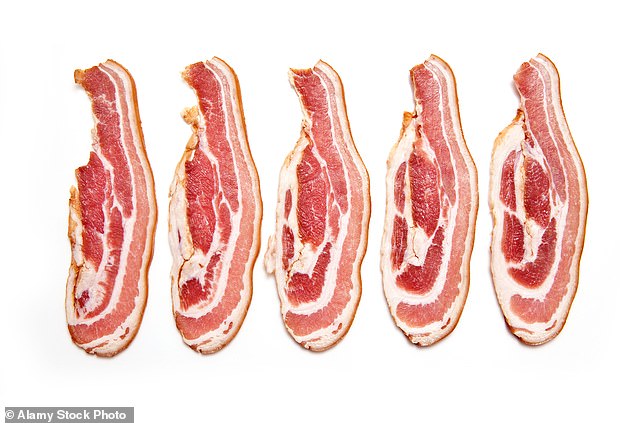
These tiny pieces of fat resemble the 'marbling'—the thin streaks of white fat seen in premium steak cuts—that adds juiciness. However, whereas such marbling may be appealing in meats, it is not as desirable when found within our bodies.
Professor Viviany Taqueti, the head of the cardiac stress laboratory, who headed the Boston study released earlier this year in the European Heart Journal found the more fat someone had in their muscles, the higher their chance of dying or being admitted to hospital for a heart attack or heart failure (where the heart cannot pump blood effectively around the body).
Her study examined 669 individuals aged around 63 who experienced chest pain or difficulty breathing, yet did not have any obstructions in their arteries—the typical reason for such symptoms.
Doctors scanned the patients' hearts to assess their functionality and gauge both the quantity and position of muscle fat within their chests. Individuals exhibiting the highest amounts of this fat were found to be at greater risk for harm to the minuscule blood arteries responsible for supplying oxygen to the heart.
With each 1 percent rise in fat within the muscles, there is a corresponding 2 percent higher chance of experiencing harm to small blood vessels and a 7 percent greater likelihood of encountering heart disease.
Individuals with reduced levels of muscle fat exhibited approximately a 50 percent decrease in the risk of cardiovascular issues and mortality.
Surprisingly, the amount of lean muscle mass an individual possesses cannot be accurately determined by their weight alone. Professor Taqueti proposed that this might indicate a limitation in using Body Mass Index (BMI) as a measure.
Professor Taqueti explains, “The amount of fat within the muscles varied greatly. Some individuals had less than 5 percent, whereas those with an equal BMI could have more than 25 percent. You wouldn't be able to tell these patients apart just by looking at them; their outward appearances were very much alike.”
This is the most recent research contributing to the body of evidence suggesting possible harmful effects of fat within muscles. For instance, a U.S.-based study from 2003 involving nearly 3,000 adults discovered that individuals suffering from Type 2 diabetes had elevated levels of muscular fat compared to those without the condition.
Doctors are aware that the location of fat within the body greatly affects one's health. It is widely known that accumulating fat around the midsection poses greater risks compared to having it on the thighs and buttocks. This indicates an accumulation of fat around vital organs, which increases the likelihood of conditions such as hypertension, asthma, cardiovascular diseases, or even dementia.
In the meantime, fat accumulation within the arteries may result in their narrowing, which is typically responsible for causing most cases of heart attacks and strokes. According to the research conducted in Boston, fat deposits inside the muscles indicated a greater likelihood of developing heart disease compared to fat concentrations located around the heart or liver.
Intimuscular fat appears to be especially detrimental to the heart because of its strong impact on metabolism. This causes an increase in blood sugar levels, which subsequently accumulates in the arteries, causing them to narrow. As a result, it becomes difficult for enough blood to flow through effectively.
'Fat stored beneath the skin, often referred to as "cuddly" fat, is generally not linked to an increased risk of heart disease,' explains Professor Taqueti.
'It is relatively harmless and does not appear to cause many issues. However, fat located within or around organs is generally more active; it has the ability to release hormones and chemical messengers into the bloodstream that affect how efficiently the body utilizes energy, potentially having significant effects on overall health.'
Fit muscles have an important part in the effective use of the body’s energy, absorbing glucose from the bloodstream. This glucose then gets converted into fuel for the muscles.
A hypothesis suggests that when your body loses efficiency in transporting glucose into cells—this typically starts around age 45 or due to obesity and type 2 diabetes—some excess glucose might get stored as fat within muscle tissues instead. This creates a cycle where fatty muscles impair their ability to utilize glucose effectively for energy purposes. As Professor Francis Stephens from the University of Exeter clarifies, focusing on exercise metabolism and physiology, 'The muscles play an essential role since they serve as significant storage sites for glucose; however, accumulated fats hinder this process.'
'The fat inside muscles seems to emit a cascade of chemical messengers known as cytokines and harmful substances that interfere with the function of insulin molecules—the hormones responsible for helping glucose enter muscle cell walls,' he explains. Consequently, glucose remains in the bloodstream, elevating blood sugar levels and increasing the likelihood of developing type 2 diabetes.'
Professor Stephens suggests that higher amounts of fat within muscles might decrease their strength. He explains, 'The presence of fat could hinder the capacity of muscle fibers to contract effectively.'
As we age, fat accumulation within muscles tends to increase, and numerous studies indicate that individuals with elevated levels of this fat are more prone to experiencing falls and may face greater challenges with mobility and walking as they get older, he notes.
At present, you cannot determine your proportion of fatty muscle, as this calculation is exclusively performed by researchers utilizing CT scans or similar imaging techniques.
However, the typical recommendations for a healthy lifestyle – such as engaging in physical activity and keeping a proper bodyweight, which may involve shedding extra pounds if necessary – can help decrease the fat within your muscles.
Individuals suffering from obesity or Type 2 diabetes who participate in weight-loss and fitness programs tend to lose muscle fat as well as fat deposits throughout their body, according to Dr. Bret Goodpaster, the scientific director at the AdventHealth Translational Research Institute in Florida. This institute oversees numerous clinical studies annually.
“We divided elderly participants aged 70 to 89 into two groups; one began a walking program designed to gradually reach five sessions per week, whereas the other did not,” he explains. “Following a year, individuals who engaged in regular exercise maintained stable fat levels in their thigh muscles, unlike those who remained inactive.”
At present, the evidence indicates that all forms of physical activity, such as weightlifting or cardio exercises like swimming, running, or walking, contribute positively to decreasing intramuscular fat. This might be due to the fact that active muscles can absorb more glucose from the bloodstream; consequently, reduced blood sugar levels could either stop this type of fat from building up or encourage it to be utilized for energy production, according to Dr. Goodpaster.
A key aspect that physicians aim to explore further pertains to how novel weight-loss injections affect this particular type of fat. Some studies indicate potential concerns regarding muscle mass reduction from these treatments; as much as 60 percent of the total weight lost might come from lean tissues, based on an analysis published in the Diabetes, Obesity and Metabolism journal back in June.
These worries revolve around shedding not only muscular strength but also the ability of muscles to burn calories, which tends to support sustained weight maintenance over time.
However, it might be possible that much of what is being lost from the muscles is actually this detrimental fat, not merely lean muscle tissue, proposes Professor Taqueti. Adding to this, Professor Stephens comments, “That would indeed be positive news. Nonetheless, it’s still too soon to conclude definitively. These investigations continue.”
Read more